The Unseen Drift: How to Make a Nymph Look Like It Belongs on the Au Sable

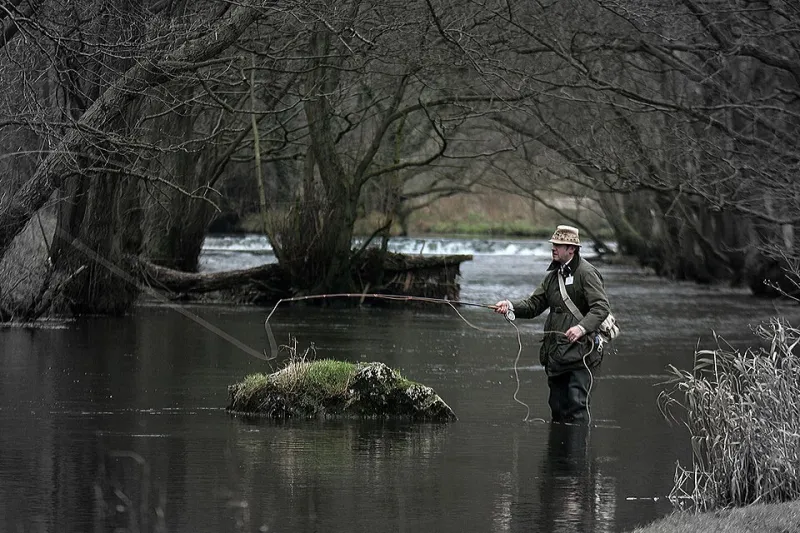
Photo: nymph fishing dead drift strike indicator river fly fishing close up, via mythmaniacs.com
The best nymph anglers on the Au Sable do not look like they are working hard. Their casts are short and quiet. Their mends are small. They spend a lot of time watching the line and very little time changing flies. That is not because they have some secret pattern. It is because they have learned that a dead drift is less about the fly and more about removing every bit of influence the angler puts on it.
On a river with as many current speeds as the Au Sable, that is harder than it sounds. The main flow, the soft edge, the pocket behind a rock, and the slick surface above a bucket all pull line at different rates. A nymph that looks fine at the start of a drift can be dragging badly three feet later. The angler who catches fish consistently is the one who notices sooner and corrects smaller.
Dead Drift Is a Verb, Not a Rig
A lot of anglers treat dead drift as a setup: indicator here, split shot there, two nymphs below. That is a rig, not a drift. Dead drift is the behavior of the fly in the water. It should move at the speed of the current it is in, with no unnatural drag, no swing at the end, and no sudden acceleration. The rig is just the tool you use to get there.
That is why two anglers can fish the same rig and get different results. One is managing the line. The other is casting and hoping. On the Au Sable, the difference shows up most in the middle of a long run, where the current changes and the line starts to belly. The angler who mends early keeps the nymph drifting. The angler who waits until the line is tight drags the fly and usually does not know it.
Build the Leader Around the Drift
Start with a leader that gives you control without making the cast clumsy. For most Au Sable nymphing, a nine-foot leader tapered to 4X or 5X is a good baseline. In clear, low water, go lighter. In winter, you may want a longer leader and a softer presentation, but not so long that you cannot turn it over in the wind.
The indicator goes where you can see it and where it will not spook fish. In shallow, clear water, that often means a smaller indicator placed higher on the leader. In deeper runs, you can use a larger indicator and adjust the depth so the flies are near the bottom without constantly snagging. The goal is not to fish the bottom; it is to fish just above it.
Weight is the other half of the equation. Too little weight and the nymph never gets down. Too much and it hangs up and drags. Add weight in small increments. If you are constantly snagging, you are probably too deep or too heavy. If you are not ticking bottom occasionally, you may be too light. The right amount changes with flow, so do not treat any setup as permanent.
The Mend You Make Before the Fly Lands
Most anglers think of mending as something you do after the cast. The best time to mend is often before the fly hits the water. As the line rolls out, you can throw a small upstream reach or a subtle curve that puts slack in the right place. That pre-cast correction buys you a few extra feet of clean drift.
After the cast, mend early and gently. A big mend throws a wave down the line and moves the nymph. A small mend that lifts only the line, not the indicator or the flies, is what you want. If you can see the indicator move when you mend, you mended too hard.
On the Au Sable, the current often pushes from one side or the other. A reach mend upstream can keep the line from dragging across the seam. In faster water, a series of small stack mends may be better than one big correction. The key is to stay ahead of the drag. Once the line is tight and the indicator is moving downstream faster than the bubbles, you are late.
Read the Seam, Not the Surface
The surface tells you where the water is. The seam tells you where the food is. Trout sit on the soft side of a current seam, letting the faster water deliver nymphs while they hold in slower water. If you cast into the fast water, your fly may drift over the fish, but it will also drag out of the zone quickly. If you cast into the slow water, you may not get down fast enough.
The better approach is to cast slightly upstream of the seam and let the nymph sink as it crosses into the soft edge. Watch the bubble line. Watch the foam. Watch the way the surface changes texture. Those are the clues. The fish are not evenly distributed. They are where the current brings them food without making them work too hard.
Bad Habits That Drag a Nymph
The most common mistake is casting too far. A long cast looks impressive, but it puts more line on the water and makes mending harder. Shorten up. You will catch more fish at twenty feet with a clean drift than at forty feet with a dragging line.
The second mistake is moving the indicator. If you are twitching, lifting, or swinging at the end of the drift, you are not dead drifting. Let the flies fish through the zone. If you think you have a strike, set the hook, but do not add action just to feel busy.
The third mistake is fishing the same depth all day. Flows change, light changes, and fish move. Adjust the indicator and weight as you move through the river. A rig that worked in the morning may be too deep by afternoon.
Winter and Early-Spring Adjustments
When the water is cold, trout are often glued to the bottom in slower, deeper water. You need to get down, but you also need a drift that looks natural. Go lighter on tippet, smaller on flies, and more deliberate about depth. A small nymph fished slowly through a deep bucket is often better than a big flashy pattern ripped through the same water.
In early spring, flows can be higher and dirtier. That is when you can get away with a larger fly and a heavier rig, but the same rule applies: the drift has to be clean. Fish will move for a well-presented nymph, even in off-color water. They will not move for a dragging one.
The payoff is boring. You will not see many dramatic strikes. You will just notice that the indicator stops, or ticks, or hesitates for half a second. That is the dead drift working. It is not flashy, but on the Au Sable, it is the advantage most anglers never quite commit to.