What's Happening Three Feet Down: Why Smart Au Sable Anglers Skip the Rise and Fish the Bank
There's a moment every Au Sable angler knows. You're watching a fish sip something off the surface maybe forty feet upstream, and your brain immediately starts cycling through dry fly options. Caddis? Sulphur? BWO? You tie something on, make a beautiful presentation, and the fish ignores you completely. You try again. Nothing. The trout keeps rising like you don't exist.
Here's what's probably happening: that fish isn't actually committed to the surface. It's opportunistically picking off whatever drifts into its lane — and most of what's drifting through isn't sitting on top of the water. It's suspended underneath it.
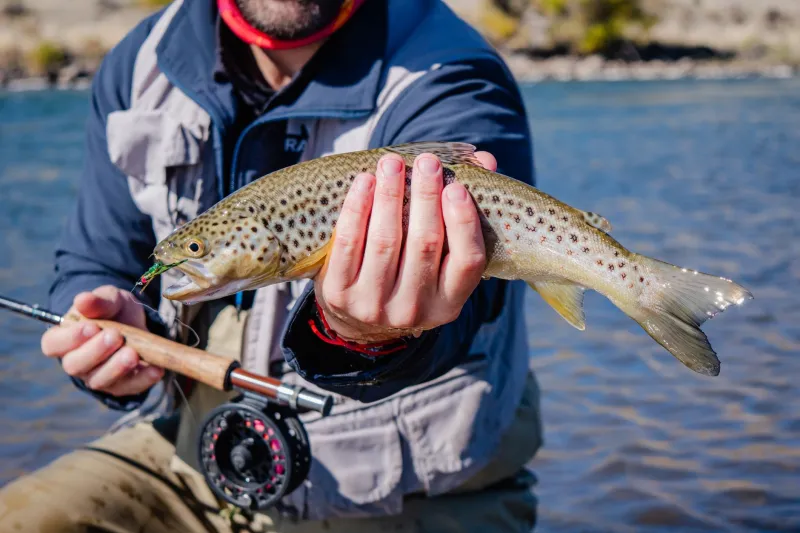
The Au Sable has a way of humbling anglers who chase the obvious. The river's best fish — the heavy, dark-backed browns that make this stretch of Michigan water genuinely legendary — didn't get that way by eating every dry fly that floated overhead. They got that way by being efficient. And efficiency, on the Au Sable, almost always means going deep.
Why High Banks Change Everything
If you've spent any time on the main stem or the South Branch, you've noticed the banks. Tall. Rooty. Often undercut several feet below the waterline. These aren't just scenic features — they're the architectural backbone of where big trout live and feed.
High banks create a very specific hydraulic situation. The current near the surface tends to move faster than the water tight to the bank and along the bottom. That differential creates a slow lane — sometimes almost slack water — directly beneath the overhang. Aquatic insects, crayfish, sculpin, and all kinds of subsurface food items get funneled along the bottom contour and pile up in these zones.
A trophy brown sitting under a high bank doesn't have to work hard. It holds in the slow lane, lets the current deliver food, and only moves when something worth eating drifts into range. It might flash to the surface occasionally, which is what catches your eye — but the majority of its feeding is happening well below where you're looking.
Reading Underwater Topography Without Getting Wet
You don't need polarized glasses that cost more than your rod to read subsurface structure, though quality optics definitely help. What you need is a mental model of how the river bottom behaves relative to what you can see on the surface.
Look for current seams along the bank where faster mid-river water meets slower bank water. That edge is a conveyor belt. Now look at the bank itself — if it's cut back and the roots are exposed, there's almost certainly a pocket of dead or slow water right at the base. That's where you want your nymph.
Riffles upstream of a high bank are your friend. They churn up food and deliver it downstream, and the bank acts like a catcher's mitt. Work any section of high bank that sits immediately downstream of broken water, and you're probably fishing over something.
Log jams and fallen timber along these banks amplify everything. Wood creates additional structure, slows water even further, and gives fish multiple holding positions at different depths. On the Au Sable, a downed cedar along a high bank is essentially a trout apartment complex.
The Nymph Rig That Actually Reaches Them
Fishing nymphs tight to a high bank on the Au Sable isn't the same as lobbing a weighted rig into a pool on some freestone creek out west. The presentation has to be precise, and the depth has to be right.
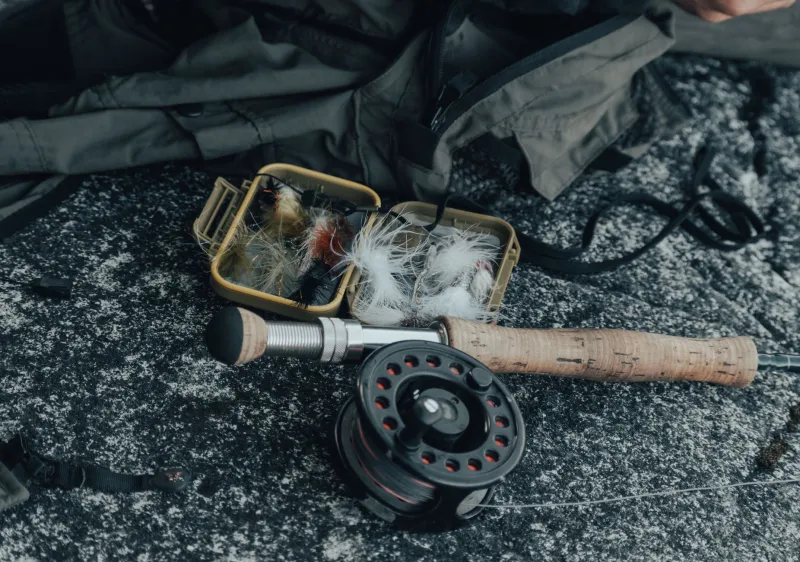
A two-fly nymph rig works exceptionally well here — one of the core principles we've built this shop around. A heavier point fly like a Hare's Ear, Pheasant Tail, or a locally-tied Au Sable Special gets you to the bottom quickly. A lighter dropper above it — maybe a soft hackle or a small bead-head midge — covers the middle column. You're essentially fishing two different depths simultaneously and letting the fish tell you where they want it.
Weight selection matters more than most anglers admit. Too light and your flies never reach the zone before they've drifted past the bank. Too heavy and you're snagging roots. Split shot placement — above the top fly rather than between them — gives you better depth control without killing the natural drift of the dropper.
A longer leader helps. Most Au Sable bank fishing situations benefit from a 9 to 12-foot leader, sometimes longer if you're casting under low-hanging branches. Fluorocarbon tippet in the 4X to 5X range handles the abrasion from roots and submerged wood while staying low-visibility in the Au Sable's clear water.
The Cast You Need to Make
Angle is everything. A straight upstream cast to a high bank usually results in drag before your flies reach depth. A reach cast — where you throw a little slack upstream after delivery — buys you the extra second or two needed for the rig to sink and settle into the slow lane.
Casting parallel to the bank and slightly upstream, then mending immediately to keep the indicator or fly line from dragging the rig, is often more effective than casting directly at the bank. You want your flies to arrive at the bank at depth, not skim the surface down to it.
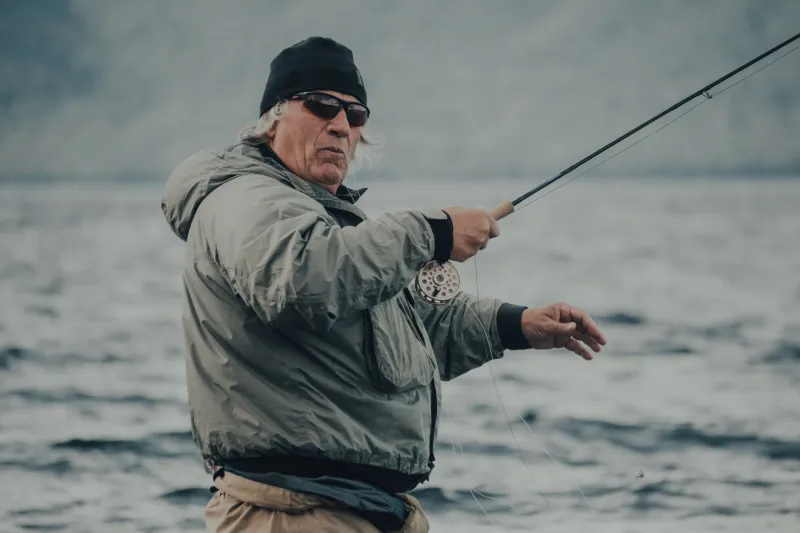
When you're fishing from a canoe or drift boat — and if you haven't floated the Au Sable, put it on your list immediately — bank shots require a quick release. Cast, mend, and let the drift happen fast. You won't have long before you're past the zone.
When Fish Are Rising and You Should Still Ignore Them
This is the hard part. It goes against every instinct you've built up over years of fly fishing. But if you're seeing sporadic, lazy rises along a high bank during a sparse hatch, consider what those fish are actually eating.
Emerging insects spend the majority of their vulnerable time drifting subsurface before they reach the film. Cripples and emergers suspended just below the surface account for a huge percentage of what trout eat during a hatch — more than the fully-emerged dries that you can actually see. A nymph or soft hackle fished in the top six inches of the water column during a hatch will often outperform a dry fly, especially for the bigger fish that are less willing to fully commit to the surface.
Next time you see a fish rising along a high bank, try a nymph rig before you reach for the dry box. Fish it shallow if the rises look surface-oriented, deeper if they don't. Let the fish tell you where they are.
The Payoff
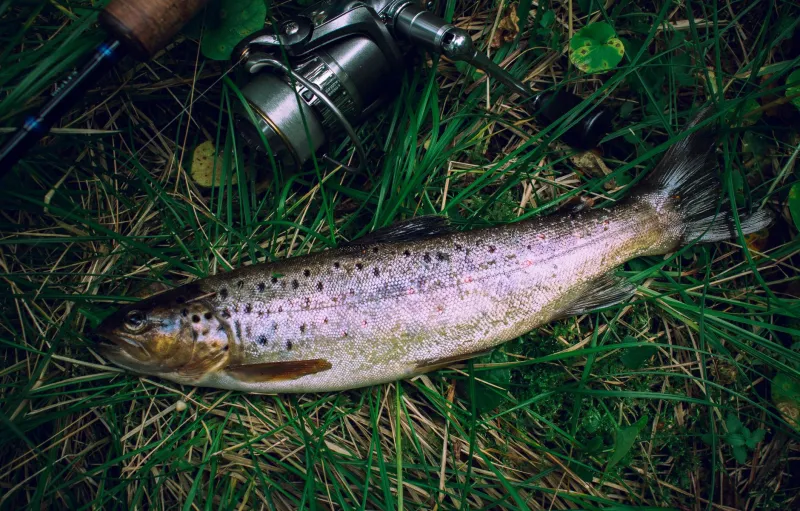
Fishing subsurface along the Au Sable's high banks isn't glamorous. There's no satisfying visual take, no watching a fish tip up to eat your fly. What there is, if you do it right, is weight — the sudden, heavy resistance of a brown trout that's been living in that bank for three or four years and has never seen the inside of a net.
That's the trade. Give up the rise, gain the river.
If you want to talk through the right nymph setups for the specific water you're planning to fish, stop into the shop or reach out online. We spend a lot of time on this river, and we're happy to point you toward what's working.