Stop Hauling Half a Tackle Shop: How to Build a Smarter Fly Box for the Au Sable
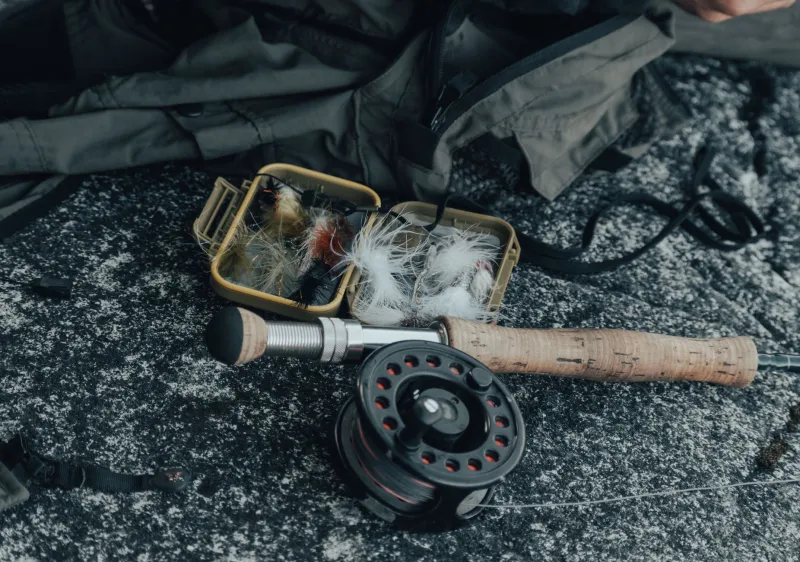
Open your fly box right now. Go ahead. How many of those flies have you actually fished in the last two seasons? Half? A third? Be honest.
If you're like most anglers who spend time on the Au Sable, you've got a box — maybe two or three — packed with patterns collected from shop visits, online impulse buys, and well-meaning advice from buddies who swore a certain fly was "the one." The result is a cluttered, heavy, anxiety-inducing collection that makes pattern selection harder, not easier.
This isn't a gear lecture. It's a practical conversation about what the Au Sable actually demands from your fly box, and what you can safely leave at home without losing a single fish.
The Myth of the "Just in Case" Fly
The biggest driver of fly box bloat is fear. Fear that the fish will be eating something specific, and you won't have it. Fear of being caught unprepared. So you carry everything.
Here's the thing — the Au Sable is a remarkably well-documented river. Decades of hatch data, guide reports, and angler logs have mapped out what's emerging, when, and where with pretty impressive consistency. You're not fishing a mystery water. You're fishing one of the most studied trout rivers in the Midwest. That means you can make informed, deliberate choices about what goes in your box rather than packing for every hypothetical.
The "just in case" fly is usually a fly you'll never tie on. Clear it out.
Start with the Hatch Calendar, Not Your Gut
The Au Sable runs a predictable hatch calendar that any serious angler should know by heart — or at least have written on a card in their vest. Hendricksons in April and early May. Sulphurs rolling through late spring. Hex in June and into July. Tricos and Ants through August. Streamers and nymphs carrying the load in winter.
Before you audit a single fly, pull up that calendar and ask yourself: does my box reflect this schedule, or does it reflect the last fly shop I walked into?
A lot of anglers are heavy on attractor dries — Royal Wulffs, Elk Hair Caddis in six sizes — because those patterns are exciting and sell well. Nothing wrong with them, but if your Sulphur Emerger supply is thin and you're fishing the Au Sable in late May, you've got your priorities backwards. The hatch calendar is your north star. Build around it.
The Redundancy Problem
Open your box and line up every dry fly you've got. Now look for duplicates — not just the same pattern, but the same function. A size 16 Parachute Adams and a size 16 Comparadun in the same gray-olive tone are doing the same job. You probably don't need both on a given trip.
This is where anglers lose the most real estate in their boxes. Three or four variations of the same basic silhouette, each purchased at different times, each taking up a slot. Consolidate aggressively. Pick the version you actually reach for and let the others go — or at least leave them home.
The same goes for nymphs. Pheasant Tails in sizes 14, 16, 18, and 20? Pick two sizes that cover the bulk of what you'll encounter on the Au Sable and move on. You're not entering a competition. You're fishing a river.
What the Au Sable Actually Rewards
If you want a lean box tuned to this river specifically, here's how to think about it in broad strokes:
Dries: You want solid coverage of the major hatches — Hendrickson, Sulphur, Hex, Trico, and a reliable caddis pattern. Throw in a foam terrestrial or two for summer afternoons and a basic parachute attractor for searching. That's it. Maybe fifteen patterns total across those categories.
Nymphs: A Hare's Ear, a Pheasant Tail, a Caddis Pupa, and a Hex Nymph for late spring. A bead-head version of each if you're fishing deeper runs. You're covered.
Streamers: The Au Sable's brown trout respond well to Woolly Buggers, articulated patterns, and classic Muddler-style flies. A handful of colors — olive, black, natural — in a couple of sizes will do more work than a full streamer wallet.
Emergers and soft hackles: These are chronically underrepresented in most boxes and chronically underutilized on the Au Sable. If you're going to add something, add here. A well-placed soft hackle during a Sulphur hatch will outfish a dry nine times out of ten.
The Physical Audit: How to Actually Do It
Set aside an hour before your next trip. Pull every fly out of every box. Make three piles: fish it this season, fish it eventually, and honestly have no idea why I own this.
The third pile goes in a drawer or gets donated. The second pile gets consolidated into one box that lives in your truck, not your vest. The first pile gets organized by season and hatch sequence, which is how your brain will actually access it streamside.
While you're at it, check condition. Flies with bent hooks, matted hackle, or damaged bodies aren't doing you any favors. Toss them. Replace the patterns you rely on most so you've got fresh, sharp copies when it counts.
A Lighter Box Is a Faster Box
There's a real fishing argument here beyond just tidiness. When your box is trimmed down to patterns you trust and understand, your decision-making gets faster and cleaner. You're not second-guessing yourself through thirty options. You know what's in there, you know why it's there, and you can adapt quickly when conditions shift.
On the Au Sable, that speed matters. Fish are often rising in specific windows, hatches can be brief, and the difference between a good drift and a missed opportunity is sometimes just how long it took you to tie on the right fly.
A purposeful box is a confident box. And confident anglers catch more fish.
One More Thing Before You Zip It Up
Once you've done the audit, make a note of what you actually used at the end of each trip. Not what you thought you'd use — what actually got tied on. Do that for a full season and you'll have the most honest, river-specific fly selection guide you could ever buy.
Because ultimately, the best fly box for the Au Sable isn't the one with the most flies. It's the one built around what this river actually asks of you, season after season.