When One Fly Wins: The Honest Case Against Tandem Rigs on the Au Sable
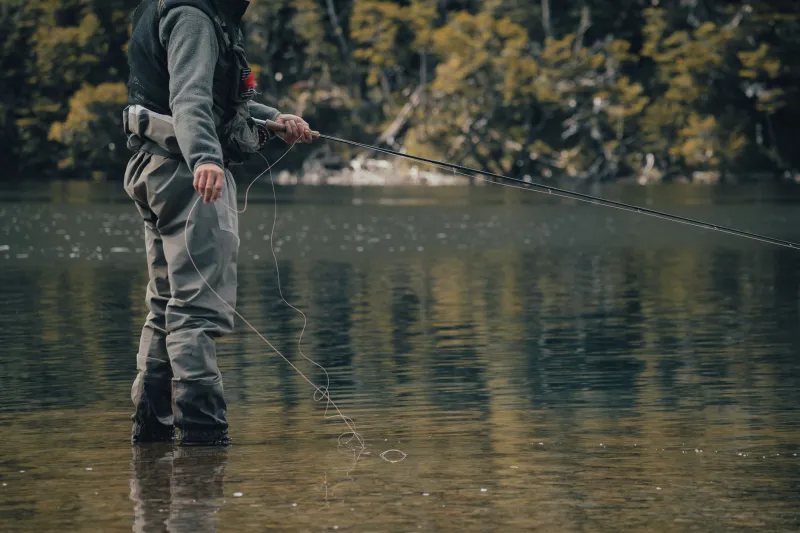
Let's get something out of the way right up front: two-fly rigs work. We're not here to say they don't. But somewhere between the fly shop counter and the bank of the Au Sable, the tandem rig became gospel — something you're almost expected to fish regardless of conditions, skill level, or what the river is actually telling you. And that's where things start going sideways for a lot of anglers.
The honest truth is that a second fly creates a second set of variables. Sometimes those variables multiply your chances. Sometimes they multiply your frustrations. Knowing which situation you're in is the whole game.
The Tangle Tax Nobody Talks About
Ask any guide who's spent real time on the Au Sable's braided channels and tight cedar-lined runs, and they'll tell you the same thing: tangles don't just cost you a few minutes. They cost you the fish. You're dealing with current seams that shift every twenty feet, overhanging structure that punishes sloppy loops, and trout that spook at the first sign of a drag problem. Throw a second fly into that equation and your margin for error shrinks considerably.
For newer anglers especially, the tandem rig often becomes a confidence killer. You spend more time picking apart bird's nests than reading water. Your presentation suffers because you're managing the rig instead of the drift. And the fish — which didn't get big by being generous — notice every bit of it.
The tangle tax is real. Factor it in before you automatically reach for that second tippet section.
When Single-Fly Presentations Actually Outperform
There are specific conditions on the Au Sable where a clean, single-fly presentation isn't just acceptable — it's the better call.
Flat, low summer water. Come August, when the river drops and clears, those brown trout get educated fast. They've seen every popular pattern in every popular shop's lineup. A single, well-placed fly on a long, fine tippet drifting through a feeding lane without any additional disturbance is often what turns a refusal into a take. The second fly adds micro-drag, extra shadow, and one more reason for a wary fish to say no.
Technical dry fly fishing during a concentrated hatch. When trout are locked in on a specific emerger or dun — say, a Hendrickson emergence in May or a Sulphur hatch on a late June evening — matching the hatch with a single pattern and getting your drift dialed in is almost always more productive than dangling a dropper below it. The dropper pulls the dry down, kills the presentation, and confuses the whole picture.
Tight structure fishing. Some of the best holding water on the Au Sable sits in places where precision casting isn't optional. Undercut banks, root wads, that narrow slot behind a mid-river boulder — these spots punish a two-fly rig. One hook in the structure and your whole setup is compromised. One fly, one shot, clean delivery.
So When Does the Second Fly Actually Earn Its Keep?
Fair question. Tandem rigs absolutely have their moments, and we'd be doing you a disservice to pretend otherwise.
The nymph-dropper setup is probably the most legitimate use case on the Au Sable. A weighted stonefly or hare's ear under an indicator, with a smaller soft hackle or RS2 trailing behind it, covers two depth zones simultaneously. In early spring when fish are holding deep but occasionally moving up to intercept drifting emergers, that's a genuinely smart way to fish.
Dry-dropper setups work well when you're covering water efficiently — when you're wading a long stretch of riffles and pools and you're not sure exactly where fish are holding or what they're keyed on. The dry acts as your strike indicator and your searching pattern. The nymph does work underneath. It's a scouting rig as much as a fishing rig, and it's honest about what it is.
Streamer tandem rigs have their advocates too, particularly during fall when big browns are aggressive and covering lots of water matters. Two different profiles, two different movement signatures — there's a real logic to it in that context.
The Question Nobody Asks at the Fly Shop Counter
Here's what we'd encourage you to ask yourself before rigging up a tandem: What problem am I trying to solve?
If the answer is "I want to cover more possibilities," that's a reasonable answer — but make sure you're not sacrificing presentation quality to do it. If the answer is "I don't know what they're eating," a single searching pattern fished well will tell you more than two flies fished sloppily.
The best anglers on the Au Sable aren't married to any particular rig philosophy. They read the water, they read the fish, and they make a call. Some days that's a tandem rig. A lot of days it's one fly, tied on carefully, fished with everything they've got.
That second fly isn't always an advantage. Sometimes it's just extra weight on the end of your line — and a reminder that complexity isn't the same thing as confidence.
Fish smart out there.