Degrees of Difference: A Week-by-Week Water Temperature Playbook for Au Sable Trout
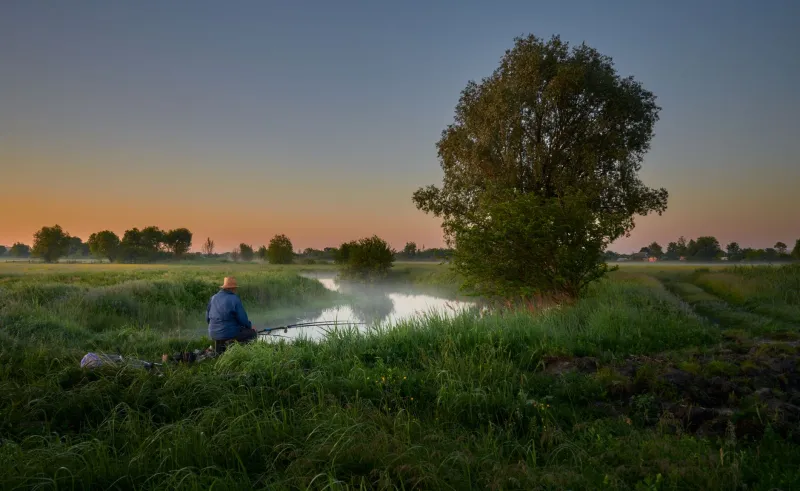
Carry a stream thermometer. Seriously. If you're not already doing it, that little tool might be the single most underrated piece of gear in your vest. On the Au Sable, water temperature isn't background information—it's the operating manual for trout behavior. Get a read on the water and you've got a head start on every decision that follows: where to wade, what to tie on, and when to even bother being on the river.
Here's how that thermal arc plays out across a full season, and what it means for how you fish.
Early Spring: Cold Water, Slow Metabolism, Tight Windows (38–48°F)
When snowmelt is still feeding the tributaries and morning air temps hover near freezing, the Au Sable's cold-spring personality shows itself. Water in the high 30s and low 40s puts trout into a kind of low-gear mode. They're not dormant, but they're not chasing anything down either. Their metabolic rate is suppressed, which means they need fewer calories—and they're not willing to burn much energy to get them.
Your best play in these conditions is slow and deep. Nymphs fished on a tight drift with minimal action are your workhorses here. Stonefly nymphs, midges, and early Baetis patterns in sizes 18–22 cover most of what the river offers at this time of year. Weight your rig to get down fast and keep it there. Leader length matters less than depth and drift quality.
Feeding windows tend to be brief and tied to the warmest part of the afternoon—typically between 1 and 4 p.m. when surface temps have ticked up a few degrees. Don't sleep in and expect a full-day bite. Position yourself in slower, deeper runs where fish can conserve energy while still intercepting food.
The Ramp-Up: Prime Feeding Temps Arrive (50–62°F)
This is the stretch every Au Sable regular lives for. As May pushes into early June and water temperatures climb through the 50s, trout metabolism kicks into a noticeably higher gear. Fish become more active, more willing to move for food, and more likely to look up toward the surface. Hatch activity increases dramatically. Hendricksons, Sulphurs, and Caddis start making appearances, and the river feels like it wakes up.
In this temperature band, your fly selection can widen considerably. Dry-dropper rigs start making real sense—you get the searching coverage of a dry fly with the subsurface appeal of a trailing nymph. Presentation still matters, but fish are a little more forgiving when they're genuinely hungry. Work the heads of pools, current seams, and any structure that breaks up flow.
Morning and evening sessions both produce, though evenings tend to bring the most reliable surface activity. Pay attention to what's actually hatching before you commit to a pattern. The Au Sable rewards observation.
Peak Summer: The Thermal Stress Zone (65–72°F and Climbing)
Here's where things get harder—and more interesting. Once water temps consistently push above 65°F, trout physiology starts working against you. Dissolved oxygen levels drop, and fish that were freely feeding a few weeks ago become increasingly lethargic and stressed. Above 68°F, you're in territory where responsible anglers start thinking seriously about whether to fish at all, and if so, how to minimize handling time.
That said, there are still productive windows—you just have to find them. Cold spring seeps and tributary mouths become thermal refuges that concentrate fish during heat waves. On the Holy Waters and other spring-fed stretches of the Au Sable, groundwater keeps temperatures more stable than on many comparable rivers, but you still need to stay aware.
Fish early. Pre-dawn through mid-morning is your window before temps spike. Target shaded stretches, deep pools, and anywhere a cold feeder creek enters the main river. Size down your flies—smaller midges, tiny Caddis emergers, and micro-nymphs in sizes 20–24 can be surprisingly effective when fish are being selective and sluggish. Avoid fishing during peak afternoon heat, both for your own success rate and for the fish's welfare.
The Hex Factor: Nighttime Fishing as a Temperature Workaround
Michigan's famous Hexagenia limbata hatch—the giant mayfly that drives big brown trout absolutely wild—is also a perfect example of thermal adaptation. The Hex hatch happens after dark partly because that's when the largest insects emerge, but also because nighttime temperatures drop back into comfortable ranges for actively feeding fish.
If you haven't tried the Hex hatch on the Au Sable, it's worth planning a trip specifically around it. Late June through mid-July, after sunset, the river transforms. Bring a headlamp, know your stretch of water well before dark, and be ready for some of the most explosive dry-fly takes you'll ever experience. It's a legitimate way to fish effectively when daytime temps are otherwise working against you.
Late Summer into Early Fall: The Slow Slide Back (58–65°F)
As August gives way to September and overnight temps start dropping, the river begins its recovery. Water temperatures ease back into the sweet spot, and trout that spent summer in survival mode start actively feeding again. This is arguably the most underappreciated stretch of the Au Sable season.
Terrestrial patterns—ants, beetles, hoppers—are productive through this transition because trout have been keying on whatever falls off the bank all summer. Streamer fishing also picks up as brown trout begin staging for fall and become more aggressive. A well-placed Woolly Bugger or articulated streamer worked through a deep pool can draw strikes from fish that ignored everything you threw at them in July.
Keep checking that thermometer as fall approaches. When temps drop back below 60°F and stabilize, you're back in the prime zone—and with far less pressure than the peak summer crowds.
The Simple Habit That Changes Everything
The anglers who consistently outfish the crowd on the Au Sable aren't necessarily using secret flies or fishing secret spots. Many of them are just paying closer attention to the river's thermal reality and adjusting accordingly. Check the temperature at the put-in. Check it again at midday. Compare it to what you saw the previous week.
Over time, you'll build a mental map of how this river behaves at different temperatures—and that knowledge compounds. It shapes where you drive to, when you get up, and what you pull out of the fly box. That's the kind of edge that doesn't come from a catalog. It comes from time on the water and a willingness to let the thermometer tell you what the river is thinking.