Skip the Rise: Why Shaded Nymph Water Produces More Au Sable Trout Than Any Hatch
There's something almost magnetic about a dry fly hatch on the Au Sable. You see the ring, you make the cast, and the whole world collapses into that one moment. We get it — that's why most of us started fly fishing in the first place.
But here's the thing nobody talks about at the fly shop: while everybody's jockeying for position on the open flats and gravel runs during a Hendrickson or Sulphur hatch, the biggest browns on the river are sitting in six inches of shade, eating nymphs like it's their full-time job. And they've been doing it all day.
Nymph fishing under the Au Sable's dense canopy stretches isn't a fallback plan. For anglers willing to work it properly, it's the most reliable, high-percentage way to put quality fish in the net — season after season.
Why Shade Changes Everything
The Au Sable's heavily wooded corridors aren't just scenic. They're thermal refuges. In summer, when exposed stretches warm into the upper 60s and low 70s, shaded runs can read several degrees cooler. Trout are cold-blooded animals with a tight comfort zone, and they vote with their fins. They migrate toward those cooler, oxygen-rich pockets and set up shop.
Beyond temperature, shade suppresses surface visibility. Trout under a canopy don't feel the same exposure pressure as fish in open water. They're less spooky, more willing to commit to a drifting nymph, and less likely to bolt when you wade into position. That combination — comfort, cover, and reduced wariness — stacks the odds in your favor in a way that no dry fly hatch can reliably replicate.
There's also the food math. Nymphs represent somewhere between 70 and 90 percent of a trout's diet depending on which study you read. Surface feeding is opportunistic and weather-dependent. Subsurface feeding is constant. The fish under that canopy aren't waiting for a hatch window — they're eating right now.
Reading the Water Beneath the Trees
Canopy sections on the Au Sable look deceptively uniform from the bank. But spend enough time wading them and you'll start to notice the structure that holds fish.
Look for current seams where faster water pushes against slower pools. Fallen timber creates hydraulic breaks that funnel drifting invertebrates into predictable lanes. Root systems undercut the banks and create overhead cover where larger fish feel secure enough to hold in relatively shallow water. Depth transitions — where a flat run suddenly drops into a depression — are prime ambush zones.
Water color matters too. Where tannin-stained water from upstream tributaries mixes with clearer main-stem flow, you'll often find a subtle color boundary. Trout key on these mixing zones because drifting food concentrates along the edge. Once you train your eye to spot these features in shaded, low-contrast light, you'll never look at a tree-lined run the same way again.
The Nymph Patterns That Actually Work Here
You don't need a fly box the size of a tackle bag. The Au Sable's canopy runs respond well to a focused selection of subsurface patterns that match what's actually tumbling through those darker currents.
Hare's Ear Nymph (sizes 12–16): This is the workhorse. The buggy, fibrous body imitates everything from mayfly nymphs to caddis larvae, and fish under the canopy don't inspect it — they eat it. Dead-drift it along the bottom and let the current do the work.
Pheasant Tail Nymph (sizes 14–18): Slimmer profile, more specific to mayfly nymphs. When Hendricksons, Sulphurs, or Tricos are building toward a hatch, trout are already feeding on the nymphal stage below the surface. A Pheasant Tail in the right size gets eaten before anything breaks the film.
Stonefly Nymph (sizes 8–12): The Au Sable has solid stonefly populations in its rocky, faster-moving sections. A weighted stonefly pattern fished tight to the bottom in deeper canopy runs produces some of the largest trout on the river. Don't underestimate it just because stonefly hatches aren't as glamorous as a Sulphur evening.
Soft Hackle Wet Fly (sizes 12–16): A personal favorite for the swing. Cast across the current, mend upstream, and let the soft hackle pulse through the lower water column as it swings into slower water. The movement triggers strikes from trout that ignored a dead-drift presentation entirely.
Presentation Is Everything
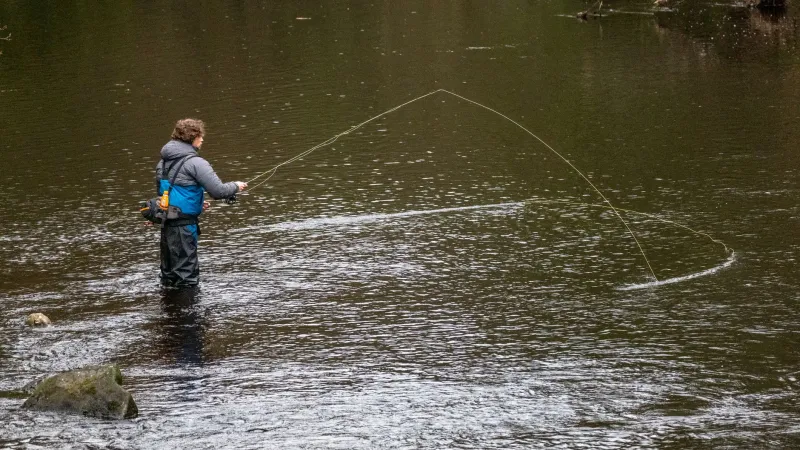
Nymph fishing under a canopy presents real casting challenges. Overhanging branches, tight corridors, and limited backcast room demand accuracy and adaptability. This is where a shorter rod — a 7.5 or 8-foot 4-weight rather than the standard 9-foot — can genuinely improve your day. Less rod means more maneuverability in tight quarters.
The reach cast and the pile cast are your friends here. Both allow you to create upstream slack that extends your drift without dragging the fly unnaturally. In slow, clear canopy pools, drag is death. A trout that's been sitting in that run for weeks has seen enough bad drifts to know the difference.
Depth control matters as much as drift quality. Use a small strike indicator positioned roughly one and a half times the water depth above your fly. Adjust split shot until your indicator ticks occasionally on the bottom — you want the fly drifting just above the substrate where trout are feeding, not floating six inches above the zone.
Watch your indicator with the same intensity you'd give a rising trout. Takes in shaded, slower water are often subtle. A slight hesitation, a sideways twitch, or a half-inch upstream bump is all you'll get before the fish spits the fly. Keep your rod tip low and your strike quick but soft.
Timing Your Canopy Sessions
One of the biggest advantages of shaded nymph water is that it fishes well across a much wider daily window than surface-dependent tactics. Midday, when most anglers are back at the truck eating lunch and waiting for the evening hatch, canopy runs are still producing. The shade keeps temperatures stable, fish stay active, and you've got the water to yourself.
Early morning in summer is exceptional. Cool overnight air and low light conditions make trout in shaded runs aggressive and less discriminating. Get there before the sun climbs above the tree line and you'll often find fish stacked in water that looks almost too good to be true.
In fall, as foliage thins and canopy cover diminishes, these same stretches transition into prime streamer and nymph water for big pre-winter browns. The thermal advantage fades, but the structure remains — and the fish haven't moved far.
A Different Kind of Au Sable Fishing
Chasing a hatch will always have a place on the Au Sable. We're not here to talk you out of it. But if you've been measuring your success by how many evening rises you can hit, you're fishing a fraction of what this river has to offer.
The canopy runs are out there right now, holding fish that haven't seen a well-presented nymph in weeks. The gear is simple, the technique is learnable, and the rewards are real. Sometimes the best fishing on Michigan's greatest river is the kind that happens in the shadows.