First Cast, Two Flies: How Au Sable Guides Are Rewriting the Rules for New Anglers
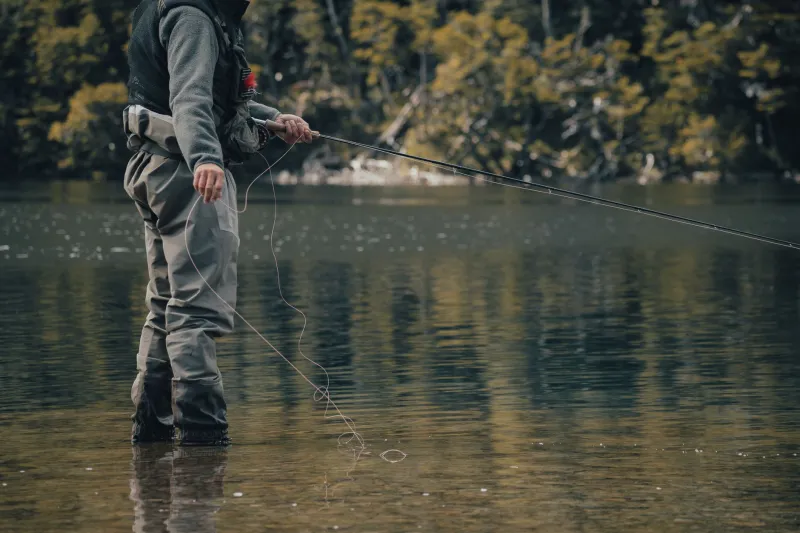
There's an old assumption baked into fly fishing instruction: master the basics with one fly, then add complexity later. Keep it simple. Don't overwhelm the beginner. Let them find their footing before you start stacking patterns.
Au Sable guides aren't buying it anymore.
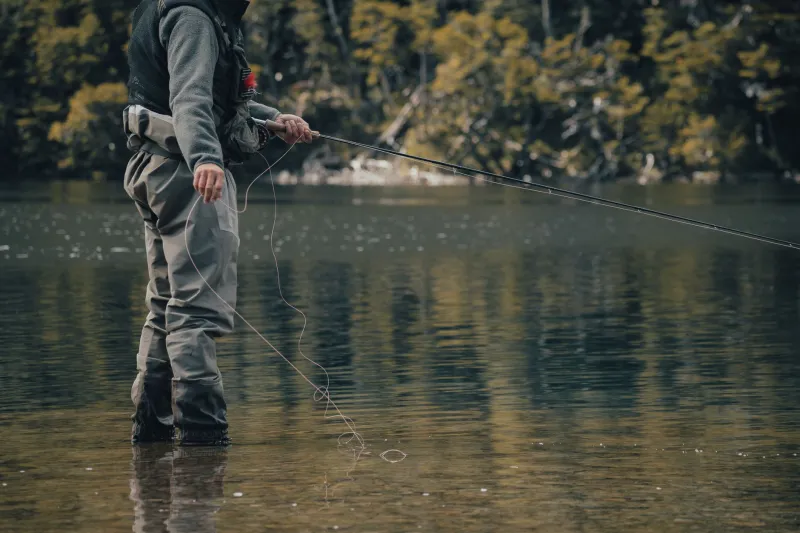
Across the Holy Water stretch and well into the mainstream, local guides have quietly flipped that model on its head. These days, if you book a guided float on the Au Sable and you've never held a fly rod before, there's a good chance you'll be fishing two flies before you've even figured out your casting stroke. And the results — both in fish counts and in how quickly new anglers develop — are making a strong argument that the old way of thinking was holding people back.
Why One Fly Feels Safer (But Often Isn't)
The instinct to start simple makes sense on paper. One fly, one connection, one thing to manage. But guides who've spent years on the Au Sable will tell you that simplicity doesn't always translate to success — and failure is a rough teacher when someone's already intimidated by the learning curve.
"When a new angler is only fishing one fly and nothing's happening, they start second-guessing everything," says one longtime guide who's been running floats on the mainstream for over a decade. "Are they casting wrong? Is the drift bad? Is the fly wrong? They don't know. But put two flies on and suddenly the river starts giving you answers."
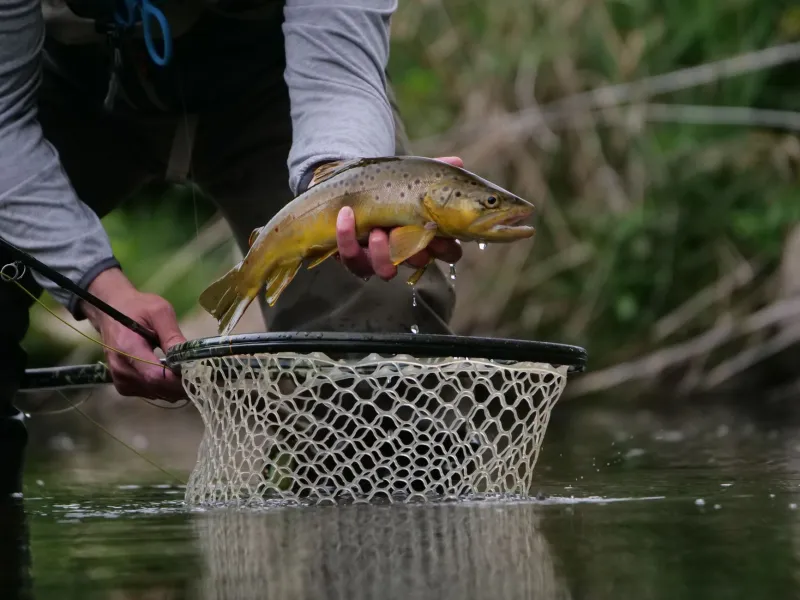
That's the core insight driving the shift. A tandem rig isn't just two chances at a fish — it's a built-in feedback system. When a trout takes the trailing nymph and ignores the dry fly up top, that's information. When the opposite happens, that's information too. The river is essentially telling you what it wants, and a two-fly setup lets you hear it.
The Au Sable Makes a Strong Case for Variety
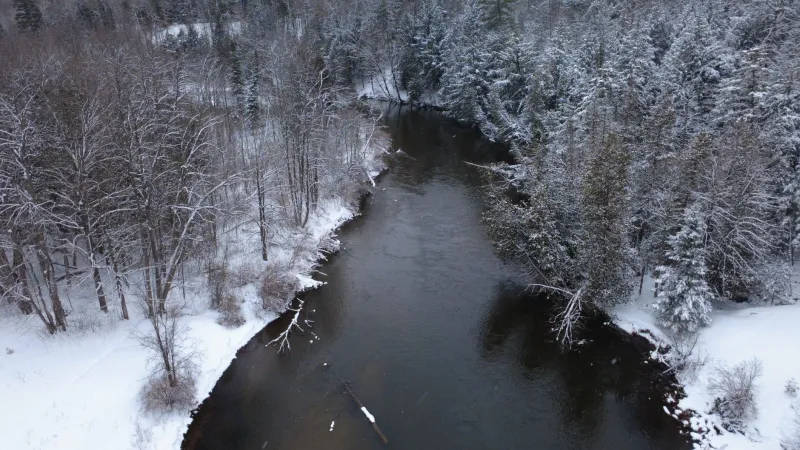
Michigan's Au Sable is a river that demands adaptability. Conditions shift throughout a single day — morning light gives way to afternoon heat, hatches fire and fade, trout move between feeding zones depending on water temperature and pressure. What's working at 7 a.m. might be completely wrong by noon.
For a beginner fishing one pattern, those transitions can feel like the river just shut off. For someone fishing two flies, there's a built-in pivot point already tied to the line.
A common tandem setup on the Au Sable pairs a high-visibility dry fly — something like an Elk Hair Caddis or a Parachute Adams — with a smaller nymph or soft hackle dropper trailing 12 to 18 inches below. The dry serves double duty: it presents a surface target and acts as a strike indicator for the subsurface fly. When the dry dips, you set. Simple as that.
For new anglers still learning to read subtle takes, this setup is genuinely forgiving. They're watching the dry fly anyway. The dropper just comes along for the ride — and often does the heavy lifting.
Building Better Habits from the Start
Here's where the guide community's thinking gets interesting. It's not just about catching more fish in the short term. Guides who've been running two-fly rigs with beginners say the method actually accelerates skill development in ways that single-fly instruction doesn't.
Fishing a tandem rig requires anglers to pay attention to drift quality across two points in the water column simultaneously. That heightened awareness — tracking both flies, managing the leader, watching for subtle takes — builds observation habits that carry over into every other aspect of the sport.
"I've had clients who came back the following season and they were already thinking like experienced anglers," one guide noted. "They're asking about leader length, about which fly to weight, about how current seams affect both patterns differently. That's not beginner thinking. That comes from spending a whole season watching two flies work."
There's also a confidence factor that shouldn't be underestimated. New anglers who land fish — even on the dropper, even by accident — stay engaged. They come back. The sport earns a second and third chance to hook them for life.
What the Setup Actually Looks Like
For anyone heading to the Au Sable and curious about rigging up a tandem, here's a basic framework that works well in Michigan conditions:
Leader and tippet: Start with a standard 9-foot tapered leader down to 4X or 5X. Tie your lead fly — typically the dry — directly to the tippet. From the bend of that hook or off the eye, drop 12 to 18 inches of 5X or 6X fluorocarbon to your trailing fly.
Lead fly options: Elk Hair Caddis, Parachute Adams, Borcher's Drake, or a hopper pattern during late summer. Something you can see easily on the water.
Trailer options: A Hare's Ear nymph, Pheasant Tail, Zebra Midge, or soft hackle wet fly. Match the trailer to what's hatching or what you're seeing in the current.
Casting adjustment: The rig casts a little differently than a single fly — there's more air resistance, and timing matters a bit more. Slow your stroke slightly and let the loop open fully. Most beginners adjust within a few casts.
Your local fly shop on the Au Sable can dial in the exact patterns for the current season. Conditions change week to week, and there's no substitute for asking someone who was on the water yesterday.
The Psychology of Having a Backup
There's one more piece to this puzzle that rarely gets discussed in technical terms: the mental game.
Fishing is inherently uncertain, and uncertainty breeds doubt. A new angler who's been casting for two hours without a strike will start to unravel — questioning their technique, their choice of water, their whole reason for being there. That's when people quit the sport.
Fishing two flies changes the internal dialogue. Instead of "nothing is working," the angler starts thinking "the trailing fly hasn't produced yet — maybe I need to go deeper" or "I've had three takes on the dry but no hookups — maybe I should switch to a smaller pattern." The thinking becomes active and problem-solving rather than passive and defeated.
That's not a small thing. That's the difference between someone who fishes once and someone who fishes for forty years.
Worth Trying on Your Next Float
Whether you're brand new to fly fishing or you've been wading the Au Sable for seasons and just haven't made the leap to tandem rigs, the case for fishing two flies is hard to argue with. The river rewards anglers who stay curious and stay adaptable, and there's no setup that builds those qualities faster.
Next time you're rigging up at the put-in, tie on a second fly before you push off. Give the system a full day. Watch what the river tells you.
Chances are, you won't go back to fishing one.