Off the Beaten Bank: How Smart Anglers Are Finding Solitude and Trophy Fish on the Au Sable's Overlooked Water
Walk the popular access points on a Saturday in June and you'll understand the problem immediately. Rigs lined up along the road, wader boots crunching gravel, and enough false casting to make a trout neurotic for a week. The Au Sable is one of Michigan's crown jewels, and that reputation comes with a cost. The fish feel pressure. The experience suffers. And frankly, the fishing just isn't what it could be.
But here's what the regulars won't always tell you: there's a whole other river out there.
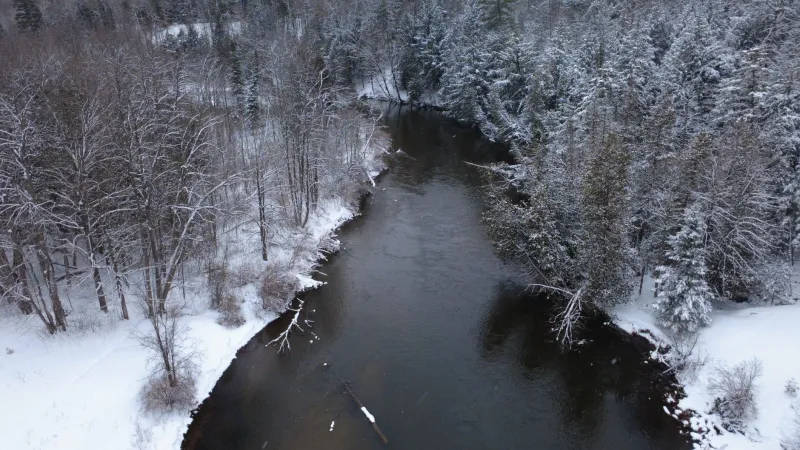
Beyond the well-worn beats near Grayling and the trophy sections that get plastered across every fly fishing magazine, the Au Sable system stretches into quieter territory. Water that rewards effort, punishes laziness, and—maybe most importantly—holds fish that haven't been spooked by a size 16 Adams every other day since Memorial Day.
Why Pressure Matters More Than You Think
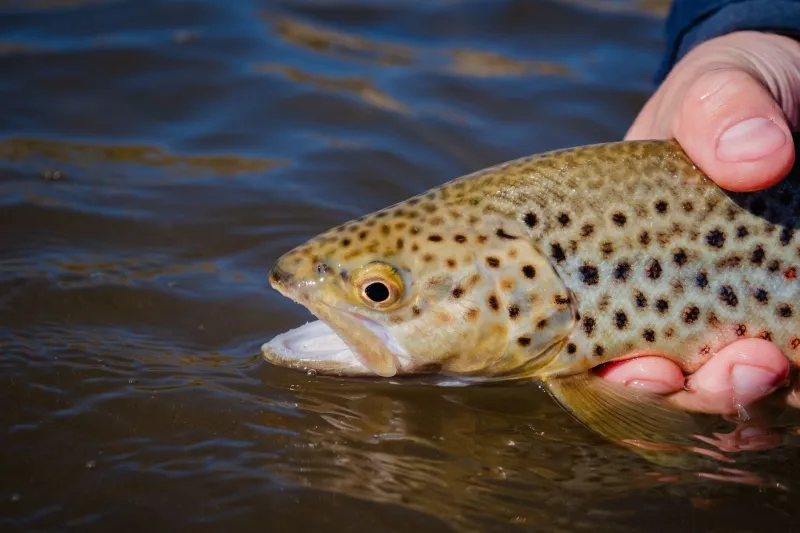
Trout are not stupid. Brown trout especially have a memory that would embarrass most casual anglers. When a fish gets lined, hooked and released, or even just sees repeated boot traffic through its feeding lane, it changes behavior. It feeds less aggressively, holds tighter to cover, and becomes exponentially harder to fool.
On the Au Sable's most popular stretches, that pressure compounds week over week all season long. The fish are still there—don't get that wrong—but you're essentially fishing a graduate-level exam every single cast. Meanwhile, a few miles upstream or downstream, those same species are feeding with genuine confidence because nobody's bothered to hike the extra quarter mile to reach them.
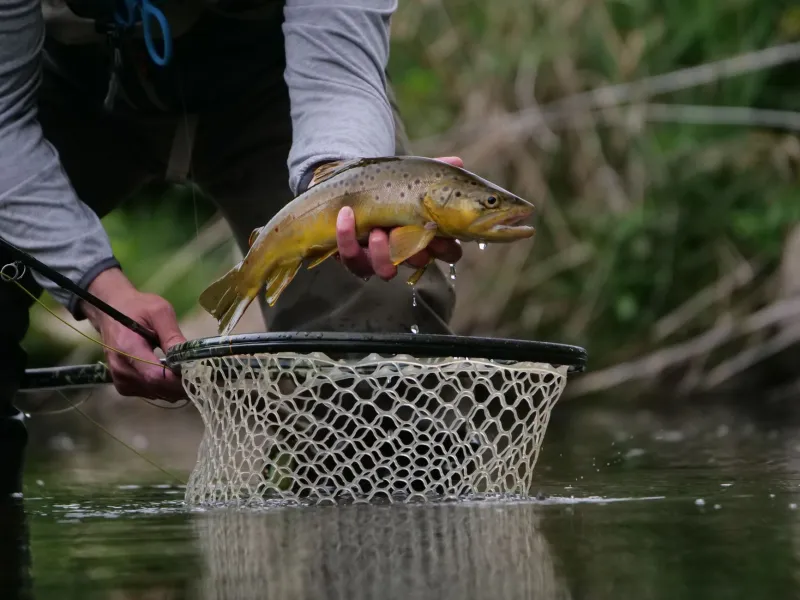
Local guide Marcus Treadwell, who's been running clients on the Au Sable for over a decade, put it plainly: "I stopped taking people to the obvious spots years ago. Not because the fish aren't there, but because I can put someone on a 16-inch brown in a stretch that sees maybe a handful of anglers all season. Why would I do anything else?"
Where to Start Looking
The North Branch of the Au Sable is probably the most underutilized piece of quality water in the entire system. It runs smaller, tighter, and demands a more careful approach than the mainstream—which is exactly why a lot of anglers skip it. The canopy hangs low, presentation windows are narrow, and you'll spend some time untangling flies from tag alders. But the fish? They eat like they've never seen a fly before, because most of them haven't.
Access points on the North Branch require a little homework. The Lovells area offers some road crossings that most people blow past on their way to the mainstream, and there are Forest Service roads that get you surprisingly close to quality water if you're willing to study a map before you go. A basic Michigan DNR fishing guide combined with a topo map will open up more options than you'd expect.
Further downstream, the lower Au Sable—below Mio and heading toward Oscoda—gets almost no fly fishing attention. It's warmer water, sure, and the character of the river changes. But this stretch holds some serious smallmouth bass that will absolutely demolish a well-presented streamer or popper. If you've been tunnel-visioning on trout, you're missing out on some of the most aggressive, acrobatic fish in the entire watershed.
The Gear Calculus for Tight Water
Fishing less-pressured stretches often means adjusting your setup. Tight canopy and brushy banks mean shorter rods are your friend—a 7.5-foot 4-weight can maneuver in places where your standard 9-foot rod becomes a liability. Roll casts and steeple casts become essential tools rather than occasional tricks.
Leader length matters too. In clear, low-pressure water, fish are more likely to eat confidently, but that doesn't mean you can get sloppy. A 9-foot leader tapering to 5X or 6X tippet is still the right call, especially on calm mornings when the surface is like glass.
Wading staff? Bring one. These lesser-traveled stretches often have irregular bottoms—logjams, deep holes, and soft sandy patches that don't get the constant traffic that keeps popular wading lanes predictable. Slow down, read the footing, and you'll be fine.
What the Guides Know About Conservation
There's a conservation angle here that doesn't get talked about enough. Concentrating fishing pressure on a handful of popular beats isn't great for those specific fish populations, even with catch-and-release. Spreading out across the river system distributes that impact and gives heavily fished sections a chance to recover.
Guide Sarah Kowalczyk, who splits her time between the mainstream and the quieter tributaries, sees it firsthand. "When I take clients to off-the-map water, we're not just having a better day—we're taking pressure off the fish that everyone else is hammering. It's better for the river long-term, and I think most anglers, if they're honest, want to be part of that."
That's a perspective worth sitting with. Choosing overlooked water isn't just a tactical move. It's a small act of stewardship.
Making the Effort Pay Off
The honest truth is that finding good off-the-beaten-path water requires work up front. You'll spend time studying aerial maps, knocking on doors to ask about easements, and probably taking a few exploratory walks that don't produce a single fish. That's part of the deal.
But once you find a stretch that clicks—a seam nobody else is fishing, a logjam pool tucked back in the alders, a riffle on the North Branch that's producing consistent evening rises—you'll understand why the local crowd guards these spots quietly. The Au Sable system is big enough to share, but only if you're willing to put in the legwork to find your own piece of it.
Stop fighting for space on the popular beats. The river has more to offer than most people bother to discover, and the fish in those forgotten stretches are waiting with considerably less attitude about the whole thing.
If you want help dialing in the right setup for tight-water fishing or exploring the North Branch, stop by the shop. We've got the gear, the maps, and a few opinions about where the crowds aren't.