Cold Hands, Big Browns: The Case for Fishing the Au Sable All Winter Long
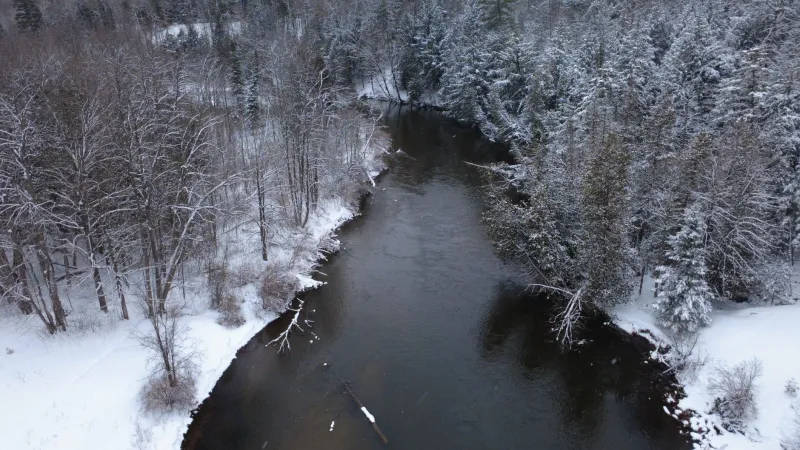
There's a version of the Au Sable that most fly fishers never see. No canoes. No weekend warriors. No lines at the Grayling access points. Just you, a river that refuses to quit, and—if you know what you're doing—some of the largest brown trout you'll encounter all year. Winter on the Au Sable isn't a consolation prize. For a certain kind of angler, it's the main event.
We get it. Cold is cold. Frosted guides, numb fingers, and the psychological weight of a gray Michigan sky can make the couch look pretty good. But here's the thing: the fish don't know it's winter. They slow down, sure, but they don't disappear. And the ones that are still feeding? They tend to be the big ones.
Why Trophy Browns Are More Accessible in Winter
During summer, large brown trout are ghosts. They tuck under log jams, hug the deepest seams, and go nocturnal when pressure and water temps climb. You can spend an entire June day on the Holy Water and never get a legitimate shot at a 20-inch fish.
Winter flips that script in a couple of important ways.
First, the Au Sable is spring-fed, which means its water temperature stays remarkably stable year-round—hovering in the low-to-mid 40s Fahrenheit even in January and February. That's cold, but it's not frigid. For brown trout, water in that range is uncomfortable enough to suppress aggressive chasing behavior, but warm enough to keep fish active and opportunistically feeding. They're not torpid. They're just selective.
Second, fishing pressure drops off a cliff. The same trophy fish that spent all summer avoiding every angler on the river suddenly has the whole stretch to himself. He's not spooked. He's not conditioned to ignore flies. He's just sitting in a predictable lie, waiting for something worth eating to drift by. That's your window.
Reading Winter Water: Where the Fish Actually Are
This is where a lot of cold-weather outings go sideways. Anglers who show up in January and fish summer structure—riffles, shallow flats, active current seams—go home empty-handed and write off the whole idea.
Winter browns concentrate differently. Look for:
- Deep, slow pools with soft bottom structure. Fish don't want to burn calories fighting current when water temps are down. They park in the slowest water they can find that still offers overhead cover or proximity to depth.
- Spring holes and tributary mouths. Groundwater seeps into the Au Sable along its entire length, and those spots stay slightly warmer than the main flow. Fish know where they are. You should too.
- Undercut banks on outside bends. Classic structure that holds fish year-round, but in winter it becomes primary real estate. A big brown can sit under a cut bank for days without moving more than a few feet.
- Log jams and debris piles in deeper runs. Same logic. Cover plus depth plus reduced current equals a winter trout's ideal address.
Move slowly. Observe more than you cast. In winter, you can often spot fish visually if you're patient and the light is right.
The Hatch Nobody Talks About
Here's the part that surprises most people: the Au Sable doesn't go entomologically dark in winter. Midges—specifically Chironomidae—hatch on this river every single month of the year. On a calm, overcast afternoon in February, you can find fish rising to midge clusters in the slower pools. Actual rising fish. In February. In Michigan.
Midges in size 20 to 26 are the backbone of a winter fly box on the Au Sable. Zebra midges, mercury midges, and simple thread-bodied emergers in black, red, and olive cover most situations. Don't overthink the pattern selection—presentation and drift quality matter far more when the fish are this deliberate.
Beyond midges, small blue-winged olives (Baetis) can make appearances on warmer winter days, particularly in the 40°F-plus range. If you see fish rising and the bugs look slightly larger than midges, tie on a size 18 or 20 BWO emerger and work the soft edges of the current.
For subsurface fishing—which will be your bread and butter most winter days—small nymphs are the play. Pheasant tails, hare's ears, and midge larva patterns in sizes 18 to 22 fished dead-drift on a tight line or under a small indicator will produce. Go lighter on tippet than you think you need. 6X is standard; 7X isn't crazy when fish are being picky.
Technique Adjustments That Make a Real Difference
Winter trout fishing isn't just summer fishing in a heavier jacket. A few specific adjustments separate the anglers who consistently find fish from the ones who don't.
Slow everything down. Your retrieve, your mends, your wading. Cold water means cold fish, and cold fish don't chase. Let the fly come to them and give it every opportunity to stay in the strike zone.
Fish deeper than feels right. Trout in winter aren't going to move up in the water column unless a hatch pulls them there. Get your nymphs down to the bottom and keep them there. Add weight if you need to. Split shot isn't cheating.
Shorten your sessions, not your focus. A four-hour winter float can be more productive than an eight-hour summer grind—but only if you're locked in the whole time. Cold and fatigue make it easy to go through the motions. Stay deliberate.
Watch for the afternoon window. On most winter days, fish activity peaks between noon and 3 p.m. when air temps are at their highest and any midge or BWO activity is most likely. Plan your best water for that window.
Gear Notes for the Cold
This isn't a full gear guide, but a few things are worth calling out specifically for Au Sable winter fishing. Layering is obvious. What's less obvious is that your fly line matters more in cold weather than you might think—many standard lines get stiff and coily in temps below 35°F, which kills your ability to mend and feel takes. A cold-weather or tropical line used in reverse for cold conditions, or a line specifically rated for cold temps, is worth the investment.
Stripping baskets can help manage line in cold conditions when you're wade fishing. Ceramic or titanium guide inserts on your rod reduce ice buildup, though you'll still want to keep a small spray bottle of isopropyl alcohol handy for clearing guides on particularly cold days.
And please—chest waders with a solid layering system underneath. Neoprene waders are warmer but less versatile. Breathables over heavyweight fleece or wool base layers work well and keep you mobile.
One Last Thought
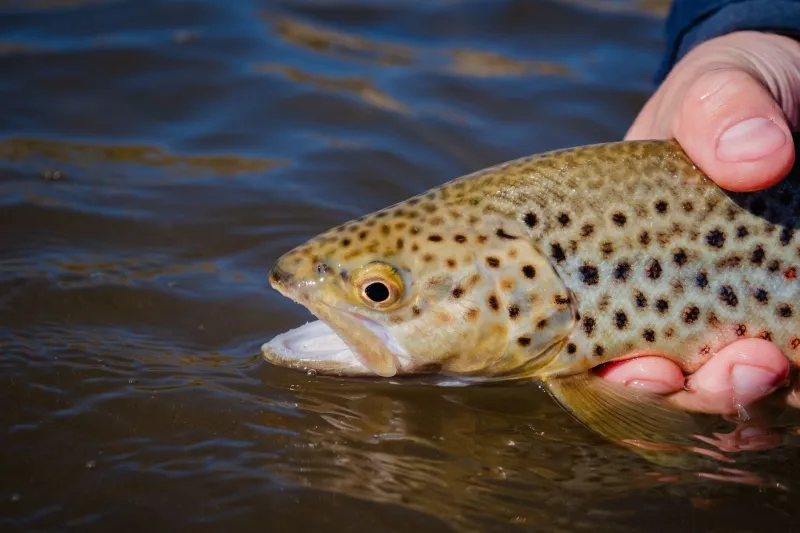
The Au Sable in winter is a different river, and it rewards a different kind of angler. Not necessarily the most experienced one, but the most patient one. The one willing to show up when everyone else has gone home, to slow down and think, to appreciate a 15-inch brown trout in February the way it deserves to be appreciated—as a genuine accomplishment on one of America's finest trout streams.
The crowds will be back in June. Right now, the river's all yours.