Gear Up Without Going Broke: A Budget Fly Fishing Setup That Can Actually Handle the Au Sable

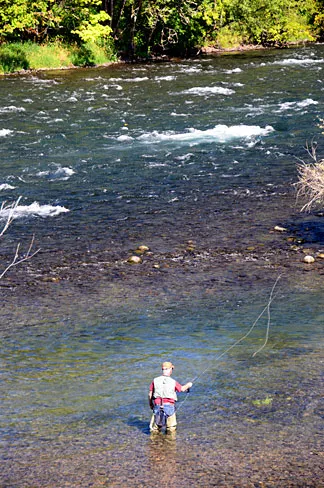
Photo by Photo by Glen Rushton on Unsplash on Unsplash
Let's be straight with you: fly fishing has a reputation for being an expensive hobby, and that reputation isn't entirely wrong. Walk into the wrong shop and you can drop two grand before you've ever gotten your feet wet. But here's the thing — you don't need to spend anywhere near that to get a solid, functional setup that'll hold up on the Au Sable.
We see new anglers come through our door all the time who've either blown their budget on stuff they didn't need, or held off getting started because they assumed they couldn't afford it. Both situations are a shame. The Au Sable is one of the finest trout rivers in the country, and it should be accessible to anglers at every budget level. So let's break it down.
Start With the Rod and Reel — But Don't Overpay
The rod-and-reel combo is where most beginners either spend too much chasing prestige or too little and end up with gear that fights them. For the Au Sable, a 9-foot, 5-weight setup is the gold standard — it handles everything from small dries to streamers and manages the river's varying conditions well.
In the $150–$250 range, you've got genuinely good options. Brands like Redington, Echo, and Orvis Encounter offer combo packages that include rod, reel, line, and backing — everything you need right out of the box. The Redington Crosswater and Echo Base are frequently recommended for beginners because they cast well, hold up to abuse, and don't require you to know anything about matching components.
Avoid the ultra-cheap combos you'll see on Amazon for under $60. They feel like fishing with a pool noodle, and they'll frustrate you out of the sport before you ever get good at it. The $150–$250 window is the sweet spot — you're getting real gear, not a toy.
If your budget is tight, check used gear first. Sites like eBay, Facebook Marketplace, and local fly fishing forums regularly have quality rods and reels at steep discounts. A used mid-range rod is almost always a better buy than a new budget rod.
Fly Line: Don't Cheap Out Here
This is the one place where we'll tell you to stretch a little. Fly line is what you're actually casting — the rod just moves it. A bad fly line will make even a great rod feel terrible, and it'll make learning to cast significantly harder.
A weight-forward floating line in the $50–$80 range from Rio, Scientific Anglers, or Cortland is plenty good. Rio's Mainstream and Scientific Anglers' Frequency lines are solid entry-level options that cast cleanly and hold up through a full season. Many combos include a decent line, so if you go the package route, check what's included before buying line separately.
Waders and Boots: Comfort Matters More Than You Think
Spending a full day on the Au Sable in bad waders is miserable. Leaky seams, poor fit, and slippery soles will ruin your trip faster than a slow hatch. That said, you don't need $500 Gore-Tex waders to start.
Neoprene waders in the $80–$130 range work fine for three-season fishing and are very durable. Breathable waders are more comfortable in warmer months but cost more — budget breathables from Frogg Toggs or Caddis run around $100–$150 and are a reasonable entry point.
For boots, rubber soles are no longer legal on many Michigan rivers due to invasive species concerns, so make sure you're buying felt-soled or studded rubber boots that are approved for Michigan waters. Check current regulations before you buy. A pair of Korkers or Redington wading boots in the $80–$120 range will serve you well.
Flies: Buy Local, Buy Smart
Here's the honest truth about flies: you don't need 500 of them. You need 50 of the right ones. On the Au Sable, a focused selection built around the river's major hatches — Hendricksons, Sulphurs, Caddis, Hex patterns, BWOs, and a handful of nymphs and streamers — will cover you for most of the season.
Buying flies from a local shop (like us) instead of ordering in bulk online has a real advantage: we know what's working right now. A $2 fly that matches what's hatching today is worth more than a $0.50 fly from a grab-bag assortment. Budget around $40–$60 to build a starter box, and add to it as you learn the river.
The Stuff You Can Skip — For Now
You do not need a fancy landing net right away. You do not need a $60 vest when a $15 pack will carry your flies and tippet just fine. You do not need polarized sunglasses that cost $200, though a decent pair of $30–$40 polarized glasses from Walmart will genuinely help you spot fish. A cheap pair of hemostats for removing hooks, a spool of 4X and 5X tippet, and a basic leader are all you need to round things out.
Skip the gadgets, the wading staff (until you actually need one), and any rod that comes with a warranty card that reads like a legal document.
Total Budget Breakdown
- Rod/Reel Combo: $150–$250
- Fly Line (if not included): $50–$80
- Waders: $100–$150
- Wading Boots: $80–$120
- Flies and Accessories: $60–$80
- Total: Roughly $440–$680
That's a real, functional Au Sable setup for well under a thousand dollars. It won't turn heads at the parking lot, but it'll catch fish — which is the whole point.
One Last Thing
Come talk to us before you buy anything. We're not going to upsell you on gear you don't need — that's not how we operate. Tell us your budget, how often you plan to fish, and where you want to start on the river, and we'll point you in the right direction. The Au Sable is worth getting into, and getting into it shouldn't require a second mortgage.