Double Down: The Case for Two-Fly Rigs on the Au Sable and How to Build One That Actually Works
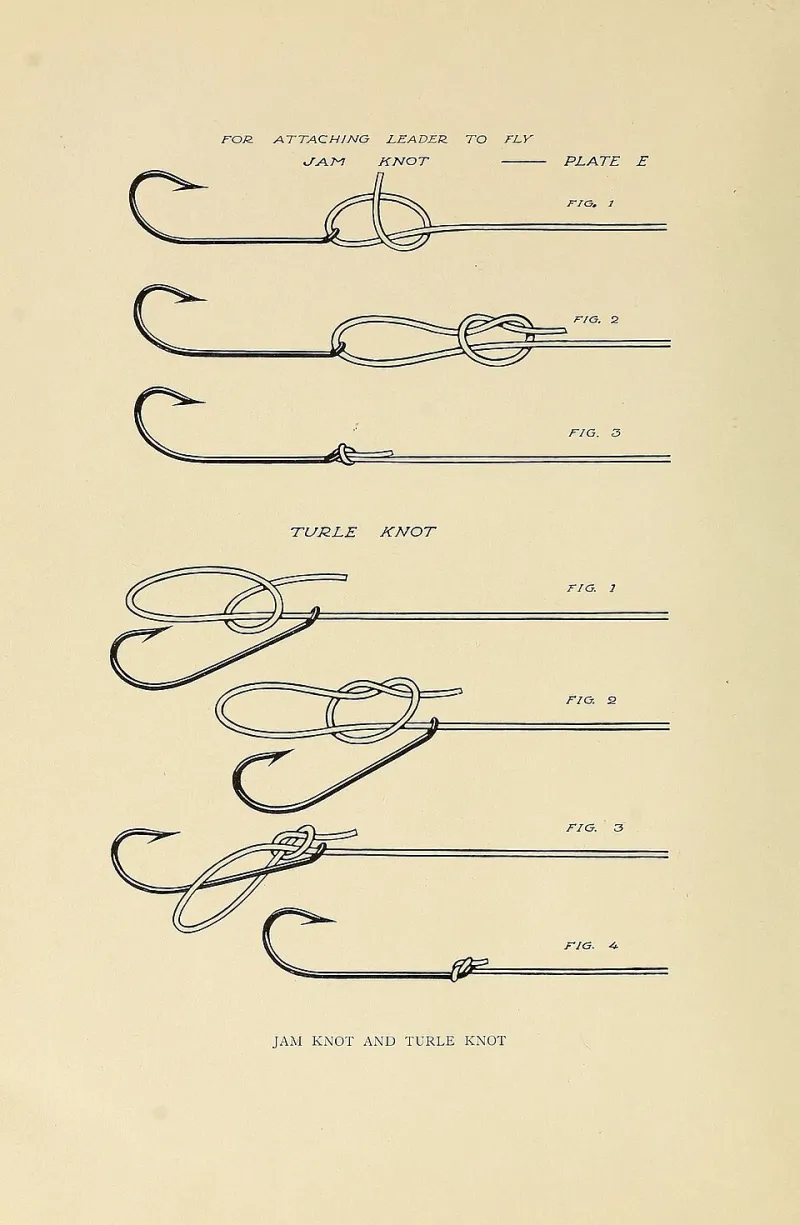
Photo: Southard, Charles Zibeon., Public domain, via Wikimedia Commons
We named this shop Au Sable Two Fly for a reason. It's not just branding — it's a philosophy rooted in years of fishing this river through every season, every hatch, and every mood the Au Sable is capable of throwing at you. Two flies, rigged correctly, outperform single-fly setups on this water with enough consistency that we'd stake our reputation on it.
But here's the thing: a poorly constructed tandem rig is worse than useless. It tangles constantly, spooks fish, and teaches you nothing. So let's get into the actual mechanics of building and fishing two-fly setups that perform on the Au Sable's specific conditions.
The Core Logic: Why Two Flies Win
Fly fishing is, at its heart, a guessing game. You're trying to match what the fish are eating from a menu you can only partially read. A single fly is one guess. Two flies are two guesses — and they're not just twice as good, they're multiplicatively better, because you can cover multiple feeding zones simultaneously.
On the Au Sable, trout frequently hold at mid-column depths while also rising opportunistically to surface food. A dry fly and nymph combination lets you cover both at once. The dry acts as a visual indicator for the subsurface fly while also presenting a legitimate target. When a fish rises to take the dry, you know your nymph was in the zone. When the dry dips and you set the hook, you've got the nymph fish. It's an efficient system.
Beyond the coverage argument, two-fly rigs let you test competing theories simultaneously. Is the fish eating caddis or sulphurs right now? Run both. The river will tell you in a cast or two instead of after twenty minutes of switching flies.
Rig Configuration: The Three Setups Worth Knowing
The Dry-Dropper: This is the bread and butter of Au Sable tandem fishing. A buoyant dry fly — something with real flotation, like a Stimulator, Elk Hair Caddis, or large Parachute Adams — serves as the anchor and indicator, with a nymph or soft hackle suspended below on a tippet section ranging from 12 to 24 inches.
The dropper length matters more than most anglers realize. In water shallower than three feet, 12–16 inches is usually right. In deeper pools, extend to 20–24 inches. The goal is to get your nymph into the strike zone without dragging the dry fly underwater.
The Double Nymph: When fish are holding deep and not looking up — common during midday summer heat or early spring runoff — a two-nymph setup fished under an indicator is deadly. Run a heavier, faster-sinking fly as your point fly, with a lighter, more subtle pattern on a dropper tied to the bend of the point hook. The heavy fly pulls both down; the lighter fly follows at a more natural depth.
The Dry-Dry: Underused and underrated. Two dry flies, typically a larger attractor pattern followed by a smaller, more exact imitation on an 8–12 inch tippet section. This rig shines during complex hatches when fish might be keying on one specific size or profile. The larger fly helps you track the smaller one, and you'll be surprised how often the trailing fly gets the take.
Building Your Leader: Materials Matter
A two-fly rig puts extra demands on your leader system. Tangles usually happen at the dropper connection, so that junction needs to be clean and well-constructed.
For the dropper connection, we prefer a tag end left from a triple surgeon's knot or a blood knot — not a hook-bend connection. Hook-bend droppers spin and twist more readily, creating the kind of leader chaos that ends fishing sessions early. A tag end off the main tippet keeps both flies tracking independently.
Tippet diameter is a balancing act. Your point tippet (the fly closest to the fish) should be one X size finer than your dropper tippet. If your dropper is on 4X, run the point fly on 5X. This way, if you snag the bottom on your nymph, you break off at the point fly and save the rest of the rig.
For most Au Sable conditions, we recommend 4X fluorocarbon for the dropper and 5X fluorocarbon for the point tippet. Fluorocarbon sinks faster than mono, which helps your nymph get down, and its lower visibility is a genuine advantage in the Au Sable's clear water.
We carry Rio, Cortland, and Trouthunter tippet material at the shop, and our staff can help you match the right diameter and material to whatever rig you're planning to fish.
Fly Pairing: The Combinations That Work on This River
Not every fly pairing makes sense. Here are the combinations we've seen produce consistently on the Au Sable:
- Elk Hair Caddis (size 14) + Soft Hackle Hare's Ear (size 16): A classic for the upper river during caddis season. Fish the soft hackle on a 16-inch dropper and let it swing slightly at the end of the drift.
- Parachute Adams (size 16) + Pheasant Tail Nymph (size 18): The most versatile all-around combination on this river. Works from May through September.
- Large Stimulator (size 10) + Zebra Midge (size 20): Sounds like an odd couple, but the Stimulator's visibility lets you track a nearly invisible midge dropper. Deadly during summer midge activity.
- Woolly Bugger (size 6) + Bead Head Prince Nymph (size 14): A double-nymph streamer hybrid for deep pools. Strip the Woolly Bugger with short, erratic pulls and let the Prince trail naturally.
Common Mistakes and How to Fix Them
Too much distance between flies. More than 24 inches on a dropper creates presentation problems and dramatically increases tangle frequency. Start shorter than you think you need to.
Mismatched fly weights. If your nymph is heavier than your dry can support, the whole rig sinks. Match your dropper weight to your dry's buoyancy — or switch to a proper indicator setup.
Ignoring cast mechanics. Two-fly rigs require an open loop and a slightly slower casting stroke. Tighten your loop and you'll crack off a fly on every backcast. Practice the wider, more deliberate delivery until it becomes automatic.
Not adjusting dropper length. Set it once and leave it all day, and you'll be fishing inefficiently in half the water you cover. Carry a pair of nippers and get comfortable adjusting on the water.
The Bottom Line
The Au Sable rewards anglers who think systematically about their presentation. A well-built two-fly rig is one of the most practical expressions of that thinking — it covers more water, tests more variables, and puts more fish in the net. That's why we built a whole shop around the concept.
Come see us before your next trip. We'll help you build a rig that's dialed in for wherever you're planning to fish.