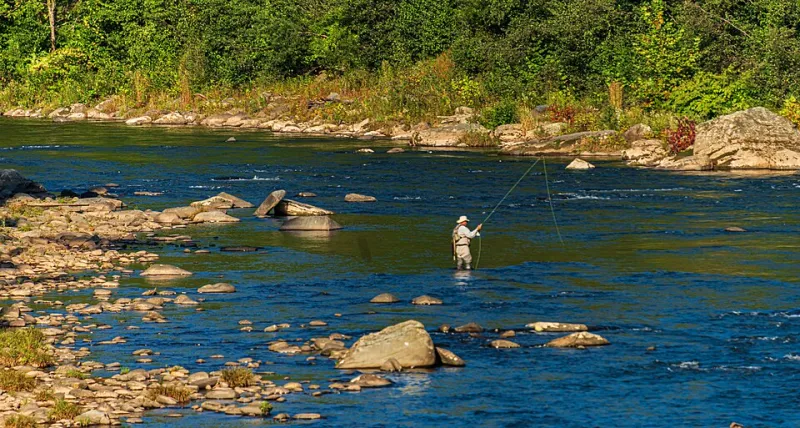
The Other Fish Downstream: A Straight-Talk Primer on Au Sable Steelhead

Photo by Photo by Adam Bouse on Unsplash on Unsplash
Where the River Changes Character
Drive far enough downstream and the Au Sable stops being the river in the postcards. The gradient softens, the bends open up, and the water takes on that green-gray look of a river getting close to big water. Below Foote Dam and on down through Oscoda, you're in a different fishery entirely—one that runs on cold discharges, lake-run fish, and a whole separate set of unwritten rules.
This is the steelhead water. And if you want the truth about it, you won't find much of it online, because the people who fish it here prefer it that way.
The Reason Locals Stay Quiet
Ask around and you'll hear steelhead referred to vaguely, in the way people talk about a good mushroom spot. There's a practical reason for that. The lower river isn't a secret in the way a backcountry brookie creek is secret—plenty of people know steelhead run up the Au Sable. What locals protect is the character of the fishery: the room to swing a fly, the chance at an unpressured pod, the absence of the sort of scene that follows a viral post.
They also protect it from a reputation. Steelhead attract some of the most dedicated anglers in the sport and, unfortunately, some of the worst behavior too—snagging, dragging fish onto gravel, shoulder-to-shoulder combat fishing. The locals here have seen what a fishery looks like when it goes that direction. A little reticence is a form of stewardship.
So treat what follows as a visitor's introduction, not an invitation to broadcast your success.
Timing: It's Longer Than You Think
Steelhead show up in the lower Au Sable as early as late October and are still trickling through in March, with the strongest pushes generally tracking cold fronts and rising flows. Late fall—right around now—is one of the best windows of the year: water in the forties, fish fresh from the lake, and almost nobody on the water because everyone else packed it in after the last hex.
There's a second season in late February and March when the thaw starts and fish move on the rise. Both windows reward the person willing to be cold and patient.
Reading Steelhead Water
Forget everything you know about pinpointing trout lies. Steelhead hold differently. They're travelers, and they use water that gives them depth, cover, and a break from the main flow.
- Tailouts and pool lips hold resting fish, often more than one.
- Deep buckets behind boulders are classic holding water.
- Seams along the edge of fast chutes are where fish slide through.
- Anything with wood and depth deserves a swing, even if it looks unassuming.
Fish them thoroughly. Steelhead don't move far for a fly, but they'll eat if you put it in front of their face repeatedly.
Gear That Makes Sense
You don't need a two-hander to catch these fish, though plenty of regulars use one. An 8- or 9-weight single-hand rod in the 9-to-10-foot range covers nearly all of it, with a floating line and a versatile sink tip for getting deep.
Leaders: keep it simple and strong. Ten-pound maxima to a 2X or 3X tippet is plenty for most situations, and you'll want it, because these fish fight like something that has never heard of your net.
Flies: What Actually Gets Eaten
Egg patterns, stonefly nymphs, and small, dark intruder-style flies cover ninety percent of what you need. Bring a few brighter patterns—chartreuse, orange, hot pink—for colored water. Swung flies and indicator nymphing both work; pick whichever you're actually good at and commit.
One stitch of ethics here: fish are spawning on gravel in the spring. Do not drift flies through the redds. If you can see fish sitting on nests, back off and let them be. The fishery depends on it.
Handling: This Is Where People Get It Wrong
A steelhead is a wild fish that has already spent a lot of energy getting where it is. Handle it like it matters.
- Land it fast. Don't play a fish to death for a photo.
- Wet your hands. Leave the gloves off. A dry hand strips slime and invites infection.
- Keep it in the water. Inhale, lift for two seconds, put it back.
- Support the fish horizontally. No vertical holds, no gill grabs.
- Revive it. Hold it facing into the current until it kicks away with authority, not resignation.
- Check the current regulations before you go, because they change, and the DNR's word is the only one that counts. Barbless single hooks and restrictions in some stretches are not suggestions.
Etiquette on a River With No Rules Written Down
The unwritten code on the lower Au Sable is pretty straightforward once you hear it.
Give a swinging angler the whole run, not the ten feet below them. Don't pull in below someone working a pool—walk past and find your own water. Ask before you wade into a lineup you didn't build. And don't post the spot, the day, and the hero shot together in the same breath.
That last one stings for people who like to share. Share the fish, share the story, leave the coordinates out of it.
The Honest Bottom Line
Au Sable steelhead are not a numbers game. Some days you'll cover three miles of river and go home with nothing but wet gloves and a story. Other days a bright fish will slam a swung fly at the end of the drift and remind you why you bothered.
Go with realistic expectations, good gear, cold hands, and a quiet mouth. That's the whole secret.