Nobody's on the Water: Why Thanksgiving Week Is the Au Sable's Quietest Bargain
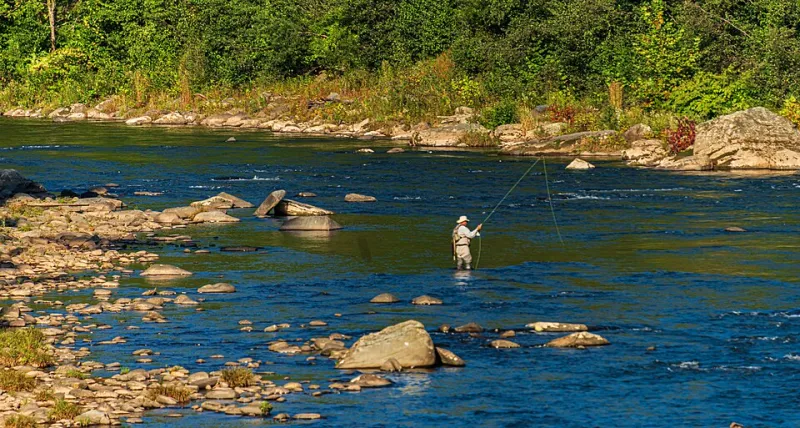
Photo: Daniel Case, CC BY-SA 4.0, via Wikimedia Commons
The Parking Lot Tells You Everything
You pull in at first light and there is one other truck. Maybe. No trailer backing down the ramp, no pod of anglers doing that slow shuffle into a run they've never read before, no orange hat bobbing in the good seam forty yards upstream. Just frost on the gravel, your breath in the air, and the river running a little louder than it did in October.
Ask most Michigan fly anglers what the best day of the year is and you'll get the same answers. The first big hex night. A cool morning in early September. Opening weekend in April, if you like company. Almost nobody says Thanksgiving—which is exactly why it deserves a second look.
The Fish Haven't Read the Calendar
Late November on the Au Sable is not the dead season people imagine. Water temperatures in the low forties mean trout have moved into winter-holding water—deep pools, soft inside bends, the slow tailouts where they can sit without burning calories. They're not chasing anything with enthusiasm, but they are absolutely still eating. Browns are wrapping up their spawn, rainbows are on the feed ahead of the long cold, and the midge and small-nymph life in this river doesn't stop just because you're carving a turkey.
Which means you're fishing for fish that have seen very few flies in the last three weeks. That's not a small thing on a river with as much traffic as this one. A pressured trout is a suspicious trout. A fish that hasn't been pestered since the leaves came down will often move for a sloppy drift that would get you laughed at in July.
Tactics That Actually Work When It's Cold
Forget covering water. This is a slow, deliberate game.
Fish the deep, slow stuff first. The heads of pools where the current accelerates hold some fish, but the meat of a winter pool—the long, glassy middle—is where trout stack up. Get your flies down. Add weight, shorten your leader, and accept that you're going to lose a few rigs in the wood.
Nymphs beat everything else. Small pheasant tails, hares ears, zebra midges, and egg patterns fished behind spawners (never over them) all produce. Size down. A size 18 that drifts drag-free will out-fish a size 12 every day of a cold week.
Swing a streamer, but slowly. There's a window in the afternoons when a slow-swung sculpin or a sparse baitfish pattern gets crushed by a fish that decided it's worth the calories. Give it a dead drift, then let it hang at the end of the swing until you can't stand it anymore.
Watch the clock, not the hatch. The best action in late November usually happens between about 11 a.m. and 3 p.m., when the water gains whatever warmth the sun is willing to give. Early and late are for driving and coffee.
Reading a River Nobody's Fishing
With no other anglers around, the usual tells are gone—no worn paths on the bank, no boot prints on the gravel bar pointing you toward the productive run. You have to read water the old way.
Look for the seams where fast meets slow, the darker slots behind structure, the tailouts where the pool shallows before the next riffle. Trout in cold water want a soft cushion of current with deep cover nearby. If you find a logjam sitting in the lee of a bend with three feet of slow water in front of it, fish it twice.
Here's the fun part: on a day like this, you can be deliberate in a way that's hard to justify when people are waiting on the run behind you. Fish a pool for forty-five minutes. Change flies three times. Re-drift the same ten feet until you've convinced every fish in it to either eat or refuse. That kind of patience is what the empty river buys you.
The Safety Part Nobody Wants to Talk About
Cold-water fishing on the Au Sable in late November is a great day out or a genuinely bad one, and the difference is usually preparation.
- Tell someone where you're going and when you'll be back. On a holiday, that person is likely at a dinner table with their phone face-down. Say it out loud anyway.
- Wear a wader belt and a PFD if you're wading anything pushy. Cold water plus a filled wader is a drowning machine, not a story.
- Watch for shelf ice along the banks. It looks solid and isn't. Don't step on the white stuff to get a better casting angle.
- Keep the phone warm. A dead battery in a November river bottom is worse than no phone at all. Inside pocket, next to your body.
- Fish with a buddy if you can. Solo is quiet, but solo is also solo.
- Know when to leave. Shivering that won't stop, clumsy hands, and fuzzy thinking are the early signs. The river will be here next week.
What Goes in the Truck
A thermos worth owning. Hand warmers—two extra, always. A dry bag with a spare base layer, because wet fleece in thirty-degree air ends your day fast. Studded boots for the icy access paths. And a flask of something hot for the walk back, which is the part you'll remember when you're back at a desk in January.
The Case for Going
There is a particular kind of quiet on the Au Sable in late November that you cannot buy, borrow, or crowd your way into. The banks are bare, the light is low and silver, and the only sounds are your own footsteps and the river doing what it's done for ten thousand years without asking anyone's permission.
Your family will still be there at four. Go fish first.