From Leaf Drop to Shelf Ice: A Late-Fall Field Guide to the Au Sable
The Au Sable does not slam the door on fall. It eases it shut. One week you are stepping around drift boat trailers in the lot; the next you are the only truck at the access, watching steam lift off the water and trying to decide whether the shelf ice at the edges is a warning or just scenery. The stretch between leaf drop and first ice is short, maybe six good weeks in a normal year, and it rewards anglers who stop treating it like leftover October.
The Window Nobody Books
By mid-November, the leaf hatch is mostly over. The crowds have thinned, the guides have shifted into off-season mode, and the river has that stripped-down look that makes the Au Sable feel older than it does in July. This is not a fringe season. It is one of the best times to have the river to yourself and find trout that have not seen a parade of flies since August.
The tradeoff is margin for error. Days are shorter. Water is colder. Weather changes faster. The fish still feed, but they do not waste energy on sloppy presentations. You can have a great day in this window, but you have to fish like the clock matters.
Where Trout Go When the Water Cools
Late-fall trout do not vanish. They tighten up. Look for them in the slower slices of current beside faster water, in deeper buckets below riffles, and in tailouts where the river loses some push. Undercut banks and logjams hold fish too, especially on gray days when the light is flat and browns feel safe.
On the Au Sable, the mistake is fishing the same summer line harder. Instead, shorten your drifts and concentrate on the soft edge. A nymph dragging through the middle of a fast chute is wasting time. Put it along the seam, let it settle, and give it a few extra feet before you pick up. Trout are not chasing much in 40-degree water, but they will slide a couple feet for a clean meal.
Streamers, Nymphs, and the Two-Fly Question
Streamers still work, but think slow and low. Small to medium sculpin patterns, leeches, and dark woolly buggers swung through deeper runs will get attention. Strip them with long pauses. If you are covering water, fish the streamer through the likely bucket, then follow with a nymph rig through the same water.
This is where a two-fly setup earns its keep. Run a modest streamer on the point and a nymph or soft hackle above it, or fish a pair of nymphs with one heavier fly to get down. Keep the rig simple. Tangles cost more time than extra flies save. Our shop bias is well known, but late fall is not the time for a science project. Two flies, clean drifts, and warm hands are the goal.
Leaves, Gauges, and the Read on Rising Water
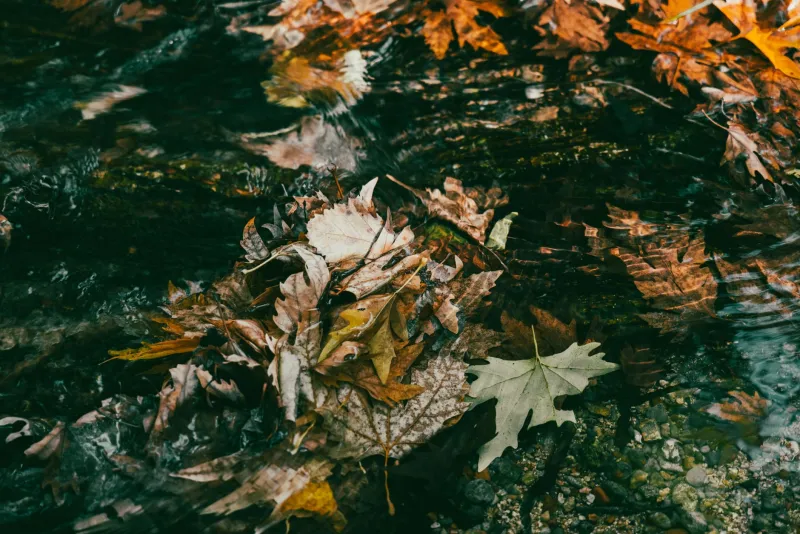
Falling leaves are not just scenery. They show you current. A line of leaves stacking along a seam tells you where the slow water meets the fast. A leaf mat against a bank can hide fish, but it can also foul every cast. Fish the clean lanes beside the debris, not the debris itself.
Check the gauge before you go, and check it again after rain. Stable or slowly falling water is friendly. A sharp rise after a cold rain turns the river dirty and pushes fish to the banks. If the gauge is climbing, do not force it. Wait a day, fish a smaller piece of water, or stay home and tie flies. The Au Sable will still be there when the graph flattens out.
Access, Safety, and the Sharp Morning Details
Late fall is the season of small hazards. Ramps get slick. Steep banks turn greasy. Shelf ice forms at the edges before the main river locks up, and it is not a platform. Stay off it. Carry a wading staff if you own one, wear traction on your boots, and keep a dry layer in the truck.
Tell someone where you are going and when you expect to be back. Daylight is short, so set a turnaround time and honor it. A headlamp, a charged phone in a zip bag, and a basic first-aid kit are not overkill. Parking can be sloppy on forest roads, and some access points close or become difficult after weather moves in. Check before you drive, respect posted private land, and do not block a plow or a gate.
The Handoff Is the Point
The Au Sable in late fall is not a lesser version of the summer river. It is a different river. The fish are concentrated, the pressure is low, and the weather asks you to pay attention. Fish clean water, slow your presentations, watch the gauge, and leave before the ice tells you to. That is the handoff. Take it while it lasts.